Waterproofing vs Damp Proofing: Materials and Methods Explained

Updated: Oct 1
A dry home is not always a waterproof home. That may sound like a small distinction, but it matters when water starts moving through foundation walls, rising through masonry, or collecting around a foundation after a storm.
This guide focuses on the materials and systems themselves: what each product is, where it belongs, and how the layers work together. If you are still deciding which solution your home actually needs, start with our step-by-step guide to choosing between damp proofing and waterproofing, then come back here for the technical detail.
Understanding the difference helps with repairs, better maintenance, and fewer surprises after heavy rain.

Waterproofing and damp proofing solve different moisture problems
The simple difference is this: waterproofing is designed to stop moisture ingress, while damp proofing is designed to resist moisture vapor, humidity and trapped dampness.
That difference affects where each method works, what materials are used, and how long the protection is likely to last.
Feature | Waterproofing | Damp proofing |
Main purpose | Stops moisture ingress from entering | Resist moisture vapor and trapped dampness |
Best for | Basements, foundations, roofs, wet areas, retaining walls | Rising damp, compromised DPC layers, Above-grade walls, foundation and floor slab dampness |
Handles hydrostatic pressure | Yes, when properly designed | No |
Typical thickness | Surface barrier | Injection treatment, moisture absorbing rods, specialized applications |
Common lifespan | Longer when installed with drainage and sound prep | Longer when moisture ingress has been resolved |
Cost level | Usually lower | Usually Higher |
Best use case | Active leaks, high water tables, flood risk, below-grade spaces | Trapped dampness, vapor and humidity control |
Hydrostatic pressure is a key term here. It means water is pushing against the structure, often from saturated soil around a foundation. If water pressure builds outside a wall, a basic damp proof coating is not enough. It may slow moisture for a while, but it will not act as a true water barrier.
Damp proofing is more appropriate in addressing rising damp, it helps prevent musty conditions, surface staining, mould, and slow or prevents moisture migration. But it should not be treated as a substitute for waterproofing when water is actively entering the home.
What waterproofing does and where it works best
Waterproofing creates a continuous barrier against water. It is common in places where water contact is expected or where water pressure may occur.
Typical waterproofing applications include:
Foundation walls
Below-grade concrete slabs
Retaining walls
Roofs and balconies
Bathrooms, showers, and laundry areas
Exterior masonry exposed to heavy rain
Crawl spaces with water intrusion
Elevator pits, utility rooms, and other low areas
Waterproofing often works best as a system, not a single product. A foundation wall, for example, may need a membrane, proper drainage, sealed cracks, grading corrections, and a sump pump. The goal is to stop water from entering and reduce the pressure that causes leaks in the first place.
Common waterproofing materials
Several materials are used for waterproofing, and each has strengths.
Liquid-applied membranes
These coatings are rolled, brushed, or sprayed onto a surface. Once cured, they form a flexible barrier. They are common on foundations, decks, balconies, and bathroom substrates.
Sheet membranes
These are pre-formed rolls or panels installed over a prepared surface. They often provide consistent thickness and strong protection. Many foundation waterproofing systems use rubberized asphalt or synthetic sheet membranes.
Cementitious waterproofing
This is a cement-based coating applied to concrete or masonry. It is often used on interior concrete walls, water tanks, and wet rooms. It bonds well to mineral surfaces, though some types are less flexible than liquid membranes.
Bentonite clay panels or sheets
Bentonite expands when wet, forming a seal. It is often used below grade, especially in commercial construction or complex foundation details.
Polyurethane and epoxy injections
These materials seal cracks in concrete walls and slabs. Polyurethane is often used where cracks may still move slightly or where water is actively seeping. Epoxy is more rigid and can restore structural bonding in some cracks.
Drainage boards and footing drains
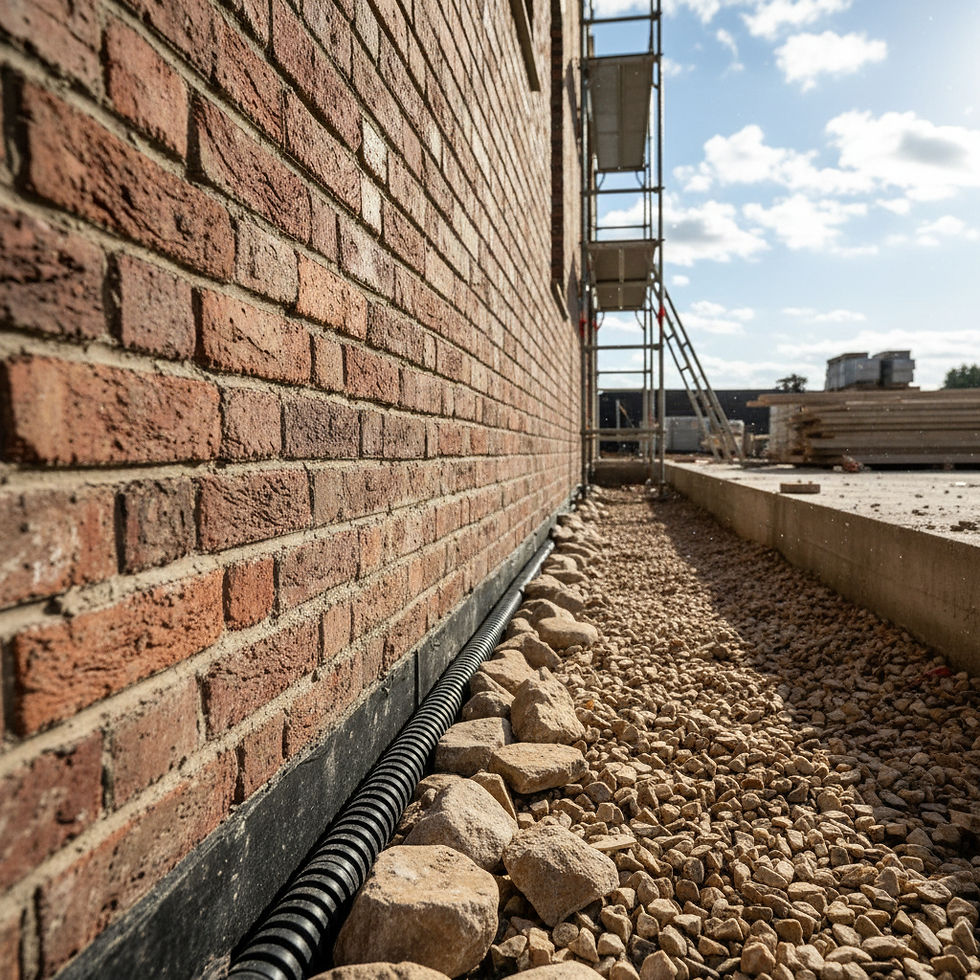
Drainage products are not waterproofing by themselves, but they are often part of a waterproofing system. They move water away from the wall so the membrane is not constantly under pressure.
A good waterproofing job focuses on continuity. Small gaps, missed corners, poor surface prep, or unsealed penetrations can become leak paths.

What damp proofing does and where it works best
Damp proofing is a specialized and targeted application for compromised areas. It helps resist moisture that moves through walls as vapor or humidity leading to trapped dampness. It does not hold back standing water or water under pressure. Instead, it provides a treatment, prevention and control of trapped dampness from moisture ingress.
Damp proofing is common in:
New foundation construction in dry or moderate soil conditions
Addressing compromised DPC layers
Above-grade masonry walls
Crawl spaces with moisture vapor or high humidity levels
Foundation walls with no active leaks
Rising damp
Homes where masonry needs breathability
Interior walls and floor slabs affected by condensation or trapped dampness
Damp proofing can reduce the chance of musty smells, mould, paint blistering, and trapped dampness. It can also help protect masonry and finishes when applied correctly.
Common damp proofing materials
Bituminous coatings
These asphalt-based coatings are widely used on foundation walls. They are often sprayed or brushed on. They resist damp soil contact but should not be relied on for serious water intrusion.
Damp proof courses
A damp proof course, often called a DPC, is a horizontal barrier installed in masonry to stop rising damp. It may be made from plastic, bitumen-based material, slate, or other moisture-resistant products.
Silane and siloxane sealers
These clear penetrating sealers are used on brick, stone, stucco, and concrete. They reduce water absorption while allowing some vapor movement. They are useful on exterior masonry exposed to rain.
Vapor barriers and vapor retarders
Plastic sheeting or specialized membranes can control ground moisture or under slabs. Proper placement matters because trapping moisture in the wrong layer can create new problems.
Injected masonry creams
These are applied to exterior walls and absorbed into masonry. They help reduce rainwater absorption on porous walls.
Damp-resistant paints and coatings
These can help with minor interior dampness, but they are often cosmetic if the source of moisture is not fixed. Paint should not be the first line of defense against trapped dampness.
Moisture absorbing rods
While traditional waterproofing methods rely on impermeable barriers, moisture absorbing rods can serve as a permanent moisture control solution in compromised building structures. They work by absorbing and regulating trapped dampness making it useful in applications such as rising damp.
The benefits of each method are not the same
Both methods protect the home, but they do so at different levels.
Waterproofing offers protection against moisture ingress. Its benefits often include:
Defense against leaks
Protection for finished foundation walls
Reduced risk of water damage to flooring, drywall, and stored items
Better control of soil-side water pressure when paired with drainage
Protection in wet or below-grade areas
Damp proofing offers a more targeted solution in compromised areas; it allows for moisture control. Its benefits include:
Helpful vapor and humidity resistance in damp areas
Reduced surface dampness on masonry
Added protection during new construction
Appropriate for rising damp
The best choice depends on the source and severity of the moisture. A dry basement with a little wall dampness may not need a major excavation project. A finished basement with water at the floor joint after rain probably needs more than interior paint.
A practical rule: if water is entering as a leak, choose waterproofing. If moisture is present as vapor, humidity or trapped dampness, damp proofing is required.
How to choose the right option for a home
The first step is to identify what kind of moisture problem exists. Many homeowners see a stain and assume the wall is leaking. Sometimes the cause is condensation, poor grading, clogged gutters, or moisture vapor moving through porous materials.
Start with a careful inspection.
Look for signs of liquid water:
Water trails on walls
Puddles after rain
Wet carpet near foundation wall edges
Active dripping through cracks
Dampness at the wall and floor joint
Efflorescence, the white mineral powder left behind by water movement
Then look for signs of vapor or lighter dampness:
Musty smell without visible leaks
Cool, clammy wall surfaces
Peeling paint in small patches
Mild dampness during humid weather
Condensation on pipes, windows, or walls
The timing of the moisture matters. Water that appears after storms often points to exterior drainage or foundation issues. Dampness that appears during humid weather may be condensation or vapor movement. Moisture near plumbing fixtures may come from supply lines, drains, or appliance leaks.
Choose waterproofing when water is active or pressure is likely
Waterproofing is the better choice when:
The leaks detected during or after rain
Water enters at cracks, joints, or around pipe penetrations
The home sits in an area with a high water table
Soil remains wet against the foundation
A previous damp proof coating has failed
You see recurring water stains despite surface repairs
Exterior waterproofing is often the most complete option for foundation walls because it stops water before it enters. It may involve excavation, cleaning the wall, repairing cracks, applying a membrane, adding drainage board, and improving footing drains.
Interior waterproofing can also be useful, especially when exterior excavation is not practical. Interior systems may include crack injection, sump pumps, drainage channels, and vapor barriers. These systems manage water that reaches the inside, rather than stopping it at the outside face.
Choose damp proofing when rising damp is present
Damp proofing may be a good fit when:
There are no active leaks
The issue is wall or floor slab dampness or vapor
The home is in a relatively dry site condition
The goal is added protection during new construction
Exterior masonry absorbs rain but does not leak indoors
Where ground moisture control is required
Fix the source before coating the surface
Many moisture problems start outside the wall. Before investing in coatings or membranes, check the basics:
Clean gutters and downspouts
Extend downspouts away from the foundation
Slope soil away from the house
Repair cracked patios or walkways that drain toward walls
Seal gaps around exterior penetrations
Keep landscaping below siding and weep holes
Avoid overwatering planting beds near the foundation
These small fixes can reduce the amount of water reaching the structure. They also help waterproofing and damp proofing last longer.
Mistakes that lead to repeat moisture problems
The most common mistake is treating every damp wall the same way. A foundation wall with hydrostatic pressure needs a different solution than a brick wall absorbing wind-driven rain.
Another common mistake is sealing moisture inside a wall. Masonry walls need to release vapor. Applying the wrong impermeable coating on the interior can trap moisture, damage paint, or contribute to masonry decay. Breathable products matter on certain surfaces.
Surface prep is another weak point. Coatings need clean, stable surfaces. Dirt, loose paint, crumbling mortar, oil, and heavy efflorescence can stop proper bonding. Crack repair is also essential. A membrane cannot perform well if major gaps remain underneath it.
Homeowners sometimes rely on waterproof paint for serious leaks. These paints may help with minor dampness, but they do not stop exterior water pressure for long. If water is pushing through a foundation wall, paint is usually a temporary patch.
The last mistake is ignoring drainage. Even a strong membrane works better when water drains away from it. Waterproofing and drainage belong together in many below-grade projects.
A simple decision guide for homeowners
Use this quick guide to narrow the choice.
Situation | Likely better choice |
Floor slabs have puddles after heavy rain | Waterproofing |
Wall feels slightly damp but never leaks | Damp proofing |
Water enters through a visible concrete crack | Waterproofing with crack repair |
Crawl space soil gives off moisture vapor | Damp proofing with a vapor barrier |
Exterior brick absorbs rainwater | Damp proofing with a breathable masonry sealer |
Finished basement needs long-term protection | Waterproofing |
New foundation in a dry site | Damp proofing may be suitable |
Foundation in wet soil or high water table | Waterproofing with drainage |
When the signs are mixed, get a moisture assessment before choosing a product. The right diagnosis can prevent wasted labor and repeated repairs.
The main takeaway for a drier home
Waterproofing and damp proofing are related, but they are not interchangeable. Waterproofing protects against moisture ingress and pressure. Damp proofing manages moisture vapor and trapped dampness. Both can be valuable, but only when matched to the real conditions around the home.
If there is active leakage or recurring storm-related water, waterproofing is usually the safer route. If the issue is trapped dampness, vapor, or rain absorption on masonry, damp proofing may provide the right level of protection.
The best moisture solution often starts before any coating goes on. Improve drainage, repair cracks, identify the water source, and choose materials that match the surface. A dry home is easier to maintain, healthier to live in, and better protected from the slow damage moisture can cause.
Frequently Asked Questions
What materials are used to waterproof a foundation wall?
Typically a liquid-applied or sheet membrane, sometimes cementitious coatings or bentonite, paired with drainage board and footing drains. The membrane blocks the water; the drainage relieves the pressure behind it so the barrier is not constantly under load.
What is a damp proof course and what is it made from?
A damp proof course, or DPC, is a horizontal barrier built into masonry to stop moisture rising through the wall. Traditional homes used slate or bitumen; modern installations use high-grade plastic membranes. A failed or missing DPC is the most common cause of rising damp.
Are penetrating sealers like silane and siloxane a form of waterproofing?
No. They belong to damp proofing. They soak into brick, stone and concrete and reduce water absorption while still allowing vapour to escape, which makes them ideal for rain-lashed exterior masonry that must stay breathable. They will not hold back water under pressure.
Can you combine damp proofing and waterproofing on the same wall?
Yes, and in practice good systems often layer them. The key is compatibility and breathability: an impermeable coating in the wrong layer can trap moisture and cause the very dampness you are trying to prevent. A specialist will match the system to how the wall is built.
How long do waterproofing systems last?
It depends on the product, the surface preparation and how well water is drained away. Quality membranes installed on properly prepared surfaces typically last many years, and sheet systems usually outlast liquid coatings. Ongoing drainage maintenance extends the life of any system.
Why does drainage matter as much as the coating itself?
Because hydrostatic pressure is what defeats barriers. Any membrane performs better when water is channelled away from the wall, so gutters, downspouts, grading and footing drains are part of the waterproofing system, not an optional extra.
Book Your Damp & Mould Inspection
The most expensive waterproofing mistake is applying the right product to the wrong problem. A professional inspection identifies the moisture source and the system your walls actually need before any work begins. Book your Damp & Mould Inspection online or call us on 084 675 0179.


